
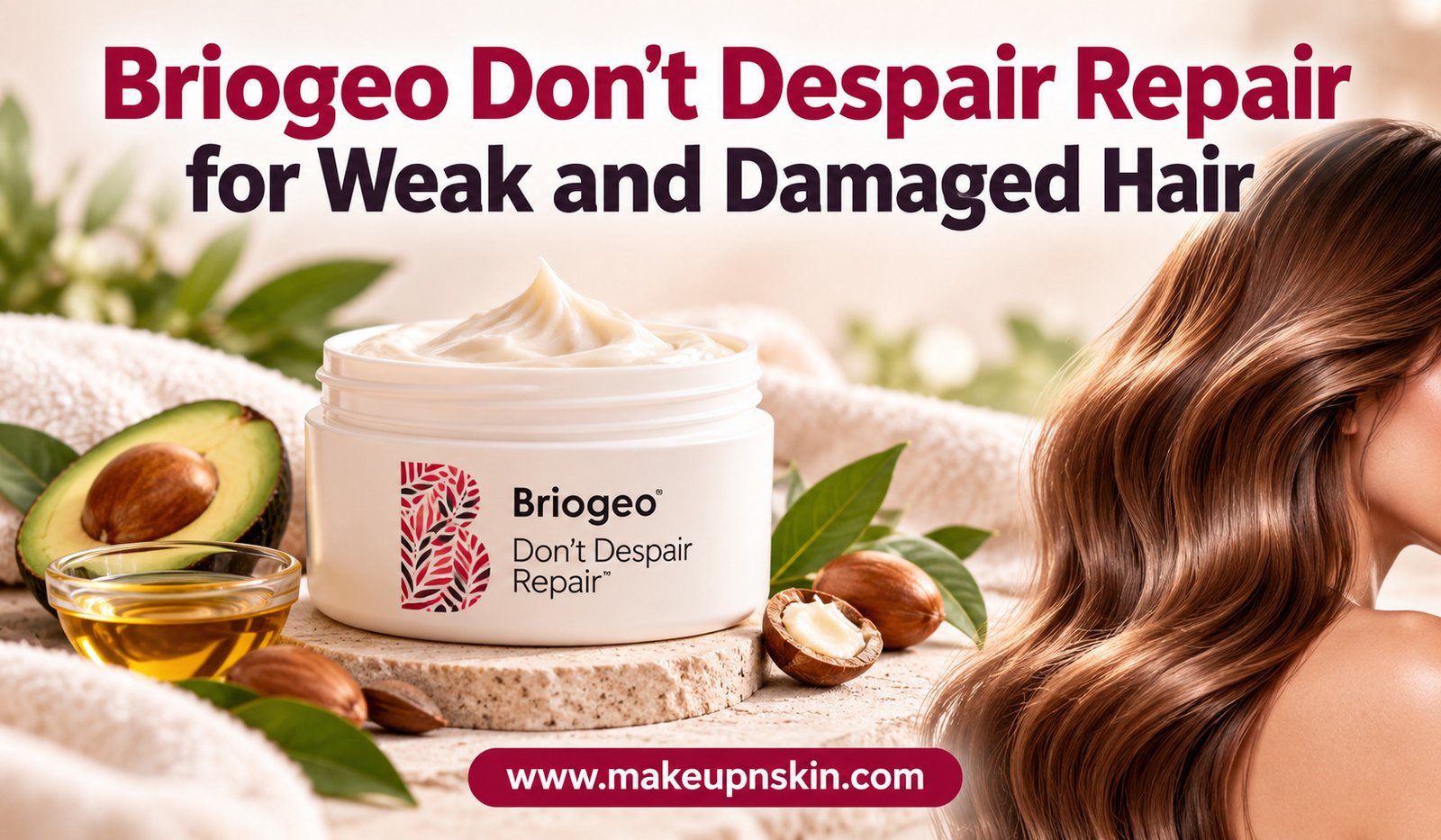
Weak and damaged hair has become one of the most discussed concerns in modern hair care. Frequent heat styling, coloring, bleaching, chemical treatments and everyday environmental exposure can leave hair feeling dry, rough and difficult to manage. As consumers become more interested in maintaining the health and appearance of their hair, intensive repair treatments are increasingly finding a place in regular beauty routines.
One product that has attracted sustained attention in this category is Briogeo Don’t Despair, Repair!, a hair-care range designed around the needs of dry, damaged and weakened hair. The collection includes several products, but its deep conditioning mask has become particularly recognizable among consumers searching for a richer treatment than an everyday conditioner.
The appeal of the range is closely connected to its approach to damaged hair. Instead of focusing only on temporary softness, Briogeo positions Don’t Despair, Repair! around strengthening, hydration and helping improve the appearance and feel of stressed hair. The range also emphasizes a blend of botanical oils, nutrients and conditioning ingredients.
However, damaged hair can have many causes, and no single product can reverse every type of damage. Understanding what a treatment can realistically do is important when deciding whether it belongs in a hair-care routine.
What Is Briogeo Don’t Despair, Repair!?
Briogeo Don’t Despair, Repair! is a collection created for hair that is dry, damaged or weakened. The best-known product in the collection is the Don’t Despair, Repair! Deep Conditioning Mask, which is designed to provide intensive conditioning while helping improve the appearance and manageability of damaged hair.
Briogeo describes the mask as a treatment that helps strengthen and hydrate hair. The formula features ingredients including rosehip oil, algae extract and B-vitamins, which are part of the brand’s approach to supporting healthier-looking hair. The product is also positioned as suitable for different hair types and textures.
The range has gained attention because it combines the concept of intensive conditioning with ingredients commonly associated with nourishing hair. This makes it particularly relevant to consumers who regularly use heat tools or chemical treatments.
Unlike a standard rinse-out conditioner, a deep-conditioning mask is generally intended to remain on the hair for longer. This gives the conditioning ingredients more time to coat and soften the strands before the product is rinsed away. Consumers interested in comparing deep-conditioning treatments with everyday conditioners can also explore Olaplex No. 5 Conditioner and What Makes It So Popular for another hair care option.
Why Weak and Damaged Hair Needs Extra Care
Hair damage does not happen for just one reason. Bleaching and coloring can affect the structure of the hair, while repeated heat styling can contribute to dryness and breakage. Mechanical stress from brushing, tight hairstyles and rough towel drying can also affect fragile strands.
When hair becomes weakened, it may show several visible changes. It can lose shine, develop split ends, become more difficult to detangle or feel rough when touched.
For people dealing with these issues, simply changing shampoo may not be enough. A more conditioning treatment can help improve how the hair feels and behaves.
Several common habits can contribute to weakened hair:
- Frequent straightening, curling or blow-drying
- Repeated bleaching and chemical processing
- Aggressive brushing or detangling
- Lack of regular conditioning and heat protection
A treatment such as Don’t Despair, Repair! is therefore best viewed as one component of a broader hair-care strategy rather than a standalone solution.
What Makes Don’t Despair, Repair! Popular?
Briogeo has built a strong identity around ingredient-focused hair care, and Don’t Despair, Repair! fits naturally into that positioning. The range appeals to consumers who want products designed specifically around damage, dryness and hair strength.
One reason the product has remained popular is its versatility. Damaged hair can occur across straight, wavy, curly and coily textures, and the range is marketed for multiple hair types. This allows consumers to approach the product based on hair condition rather than relying only on texture.
The deep-conditioning format is another important factor. Many people want a treatment that can be used periodically rather than adding another product to every wash. A mask can be incorporated into a weekly routine, particularly when hair begins to feel unusually dry or rough.
The product’s reputation is also supported by the broader popularity of “repair” and “bond-building” hair care. Consumers increasingly recognize that hair health involves more than shampoo and conditioner, particularly when hair is exposed to chemical processing.
Key Ingredients in the Formula
The ingredient profile is one of the most recognizable aspects of Briogeo Don’t Despair, Repair!. The brand highlights several ingredients that contribute to the formula’s conditioning and nourishing approach.
Rosehip oil is included as a source of fatty acids and is commonly used in beauty products intended to condition and soften. Oils can help improve the feel of dry hair by providing lubrication and reducing the rough sensation of individual strands.
Algae extract is another highlighted ingredient. Marine-derived ingredients have become increasingly common in beauty formulations because of their nutrient content and their association with conditioning and environmental protection.
The formula also includes B-vitamins, which Briogeo incorporates into its approach to strengthening and nourishing damaged hair.
It is important to remember that an ingredient appearing on a product label does not automatically guarantee a particular result. The performance of a hair product depends on the complete formulation, concentration, application and the condition of the user’s hair.
Hydration vs Hair Repair
One of the most important distinctions when discussing damaged-hair products is the difference between improving the appearance of damage and permanently repairing the hair fiber.
Hair that feels dry can often be made noticeably softer and smoother through conditioning. This can make it easier to comb and style. However, a split end cannot permanently be restored to its original state by a conditioner.
Briogeo Don’t Despair, Repair! is best understood in this context. The product can provide conditioning and help improve the appearance and manageability of damaged hair, while the user still needs to address the causes of damage.
That may involve reducing excessive heat, using a heat protectant, being gentler when detangling and trimming severely split ends.
This realistic approach can help consumers avoid expecting a single mask to solve every hair problem.
How to Use Briogeo Don’t Despair, Repair! Deep Conditioning Mask
The mask is designed to be incorporated after cleansing. Hair should generally be shampooed first, followed by application of the treatment to the lengths and ends.
Briogeo’s current directions recommend applying the mask to clean, damp hair, distributing it through the hair and allowing it to sit before rinsing. The exact instructions can vary by product version and packaging, so consumers should follow the directions on their bottle or jar.
A simple routine can look like this:
- Shampoo the hair and rinse thoroughly.
- Apply the mask evenly from the mid-lengths toward the ends.
- Leave it on according to the product instructions.
- Rinse thoroughly and style as usual.
People with very thick hair may find it useful to divide their hair into sections to distribute the treatment evenly. Those with fine hair can start with a smaller amount to prevent the strands from feeling weighed down.
Who Can Benefit From the Product?
Don’t Despair, Repair! is particularly relevant to consumers whose hair regularly experiences dryness, breakage or chemical and heat-related stress.
It may be especially appealing to:
- People with bleached or color-treated hair
- Individuals who frequently use heat-styling tools
- People whose hair feels dry or rough
- Consumers looking for an intensive conditioning treatment
The product can also be considered by people with curly and textured hair. Curly hair can sometimes feel dry because natural oils do not travel as easily from the scalp to the ends along a curved strand.
However, the ideal amount and frequency will vary. Fine hair may become heavy when too much rich treatment is applied, while thick or coarse hair may require more product for complete coverage.
Briogeo Don’t Despair, Repair! vs Regular Conditioner
A deep-conditioning mask and a regular conditioner serve related but somewhat different purposes. A daily conditioner is normally designed to provide quick smoothing and detangling after shampooing. A mask is typically richer and intended to provide a more intensive treatment.
| Feature | Briogeo Don’t Despair, Repair! Mask | Regular Conditioner |
| Main purpose | Intensive conditioning and damage care | Everyday conditioning |
| Texture | Rich treatment | Usually lighter |
| Treatment time | Longer | Usually shorter |
| Best use | Dry, stressed or damaged hair | Routine maintenance |
| Detangling | Yes | Yes |
| Hydration | Intensive | Regular |
| Frequency | Periodic or as needed | Often after washing |
This does not mean that a mask should completely replace conditioner for everyone. Some people may use a mask once or twice a week and continue using a regular conditioner during other washes.
Can It Help With Breakage?
Breakage is one of the concerns associated with weakened hair, but it is important to understand what conditioning can realistically accomplish.
When hair is dry and rough, it can become more difficult to detangle. Excessive friction during brushing can contribute to mechanical stress. Improving the hair’s conditioning and slip can make detangling easier and potentially reduce some of that stress.
However, existing broken strands cannot be permanently repaired. If breakage is significant, the best approach is usually a combination of improved conditioning, gentler handling, reduced heat exposure and professional advice when necessary.
Briogeo positions Don’t Despair, Repair! as a strengthening and conditioning treatment, but consumers should still treat the product as part of an overall damage-management routine.
The Importance of Heat Protection
One common mistake is expecting a repair mask to protect hair from unlimited heat styling. Conditioning and heat protection are different functions.
A deep-conditioning treatment can improve the feel of hair after washing, but people who regularly use straighteners, curling irons or high-temperature blow dryers should still use a dedicated heat-protective product.
Reducing styling temperatures can also make a difference. Repeated exposure to excessive heat can continue to stress the hair even when a nourishing mask is being used.
A sensible routine therefore combines conditioning treatments with protective styling habits rather than relying on one product.
How Often Should You Use It?
The appropriate frequency depends on hair condition and texture. Someone with heavily processed or very dry hair may prefer a more regular treatment, while someone with relatively healthy hair may only need an intensive mask occasionally.
There is no advantage to using excessive amounts simply because hair is damaged. Applying a thick layer of product does not automatically produce better results.
People with fine hair should generally start with a small quantity and focus on the lengths and ends. Those with thick or coarse hair may require additional product to cover the hair evenly.
Changes in texture can help guide frequency. If the hair feels soft and manageable after treatment, the routine may be working well. If it becomes heavy, greasy or difficult to style, reducing the amount or frequency can be useful.
Don’t Despair, Repair! Suitable for Color-Treated Hair?
Color-treated hair can often benefit from additional conditioning because coloring and bleaching can leave strands feeling dry or rough. Briogeo positions the Don’t Despair, Repair! range as suitable for damaged hair, making it relevant to consumers who color their hair.
However, colored hair needs more than moisture. A suitable cleansing routine, heat protection and careful handling can all help maintain its appearance.
People who bleach their hair regularly should also remember that bleaching can cause significant structural changes. No mask should be considered a complete replacement for professional hair-care advice when hair becomes severely fragile or breaks easily.
Building a Better Routine for Damaged Hair
The most effective approach to weak hair is usually consistent rather than complicated. A person does not necessarily need a large collection of products. Instead, the focus should be on reducing the causes of damage and maintaining adequate conditioning.
A practical routine can include gentle cleansing, regular conditioning, periodic intensive treatment and protection during heat styling.
Other useful habits include:
- Detangling gently, starting from the ends
- Limiting unnecessary high-heat styling
- Using a heat protectant before hot tools
- Trimming severely split or damaged ends when necessary
These steps can complement the conditioning benefits of Don’t Despair, Repair! and help reduce ongoing stress on the hair.
Is Briogeo Don’t Despair, Repair! Worth Buying?
Whether the product is worth the investment depends on what the consumer needs. People with healthy hair that rarely feels dry may not need intensive treatment frequently.
For people dealing with dry, weak or chemically processed hair, however, a dedicated deep-conditioning mask can be a useful addition to the routine. The value comes from its targeted purpose rather than simply from being a premium beauty product.
The product may also appeal to consumers who prefer ingredient-focused hair care and want a treatment that can be used periodically instead of adding several products to every wash.
As with any hair product, results can vary. Hair density, porosity, texture, damage level and styling habits can all influence the experience.
Final Verdict
Briogeo Don’t Despair, Repair! has earned attention in the damaged-hair category because it combines intensive conditioning with a formula built around ingredients associated with nourishment and hair care.
Its Deep Conditioning Mask is particularly relevant to people who experience dryness, roughness or weakened hair following heat styling, coloring or other forms of stress. The combination of rosehip oil, algae extract and B-vitamins contributes to the product’s ingredient-focused positioning.
The biggest advantage of the product is its role as a treatment rather than a quick cosmetic fix. Used appropriately, it can help hair feel softer, smoother and easier to manage.
Frequently Asked Questions
1. What is Briogeo Don’t Despair, Repair! used for?
The range is designed for dry, damaged and weakened hair. Its Deep Conditioning Mask is intended to provide intensive conditioning while improving softness and manageability.
2. Is Briogeo Don’t Despair, Repair! good for damaged hair?
It can be useful as a conditioning treatment for dry and stressed hair. It may improve the feel and appearance of damaged strands, but it cannot permanently reverse severe structural damage.
3. What are the main ingredients in the mask?
The formula highlights ingredients such as rosehip oil, algae extract and B-vitamins as part of its nourishing and conditioning approach.
4. Can people with curly hair use Don’t Despair, Repair!?
Yes. The product can be incorporated into routines for different hair textures, including curly and textured hair. Frequency and quantity should be adjusted according to individual needs.
5. Can the mask reduce hair breakage?
Improved conditioning can make hair easier to detangle and manage, which may help reduce mechanical stress. However, existing breakage cannot be permanently repaired by a mask.