
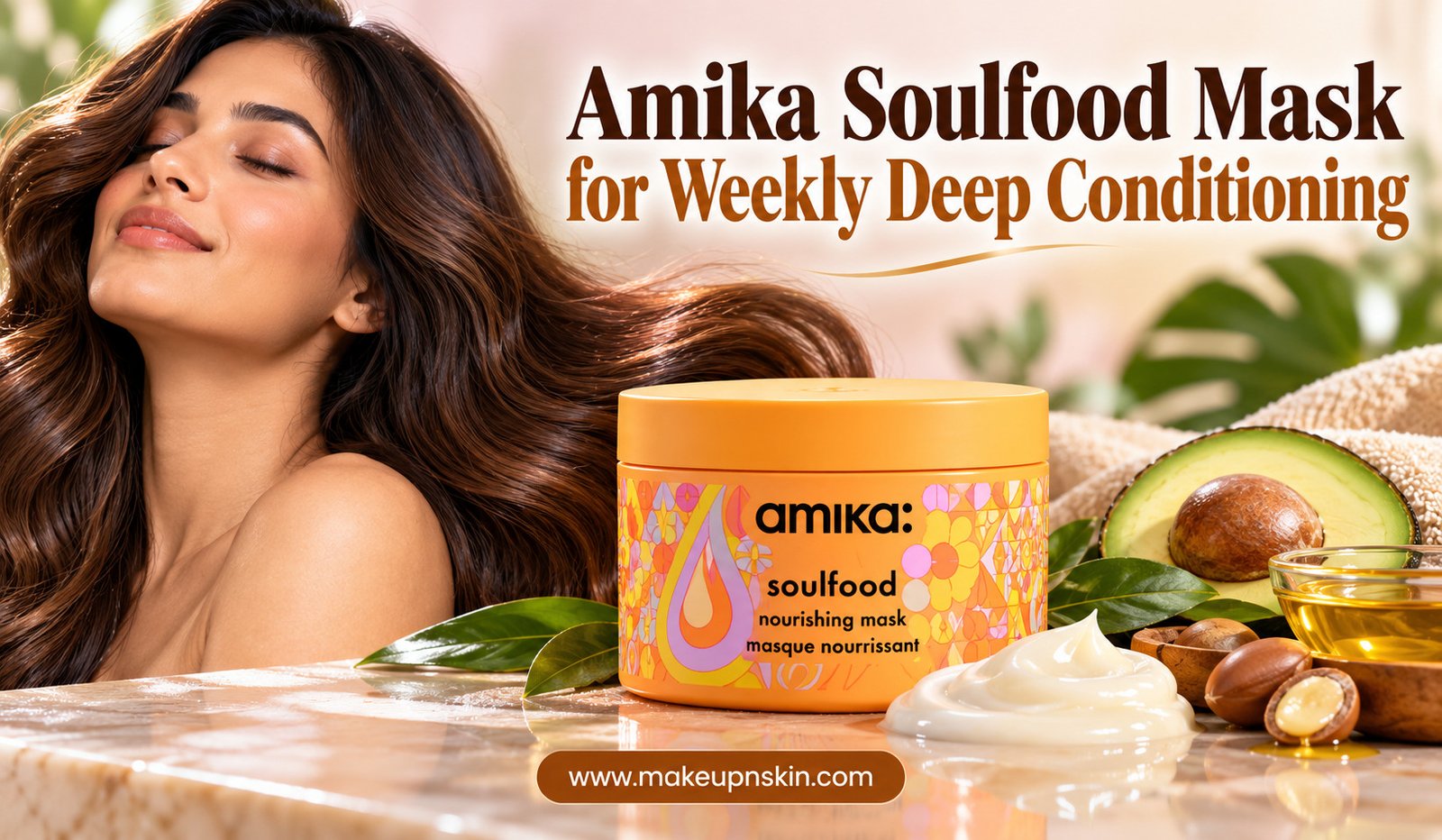
Hair care routines have changed significantly in recent years. Instead of relying only on shampoo and everyday conditioner, many consumers are adding weekly treatments designed to provide additional moisture, softness and nourishment. This shift has been particularly noticeable among people dealing with dry, frizzy, color-treated or heat-styled hair.
One product that has attracted attention in the deep-conditioning category is the Amika Soulfood Nourishing Mask. The product is positioned as an intensive hair treatment designed to nourish and condition the strands, making it a popular choice for people who want to add a weekly treatment to their routine.
The appeal of the mask comes from its combination of rich conditioning, a recognizable ingredient profile and Amika’s colorful, lifestyle-focused approach to beauty. Rather than presenting a complicated multi-step treatment, the Soulfood mask is designed to fit into a normal wash routine.
For people considering weekly deep conditioning, however, it is important to understand what a product like Soulfood can realistically offer. A hair mask can improve the feel, softness and manageability of dry hair, but it cannot permanently reverse every form of damage.
What Is the Amika Soulfood Mask?
The Amika Soulfood Nourishing Mask is a deep-conditioning treatment created for hair that needs additional nourishment and moisture. Amika describes it as a nourishing mask intended to help improve the softness, smoothness and overall condition of the hair.
The formula is particularly associated with ingredients such as jojoba seed oil, sea buckthorn berry and plant-based proteins. These ingredients contribute to the product’s positioning as a nourishing treatment rather than a basic conditioner.
The mask is designed to be used after shampooing. Instead of being rinsed away immediately like some daily conditioners, it can be left on the hair for several minutes to provide a more intensive conditioning experience.
This makes it suitable for consumers who want to dedicate one wash each week to additional hair care. However, the ideal frequency depends on hair type. Some people may benefit from weekly use, while others with fine or easily weighed-down hair may prefer to use it less often.
Why Weekly Deep Conditioning Is Becoming Popular
The rise of weekly hair masks is connected to changes in styling habits. Hair is exposed to more stress than many people realize. Blow dryers, straighteners, curling tools, coloring, bleaching and even repeated brushing can gradually affect the feel and appearance of the strands.
A daily conditioner can provide routine smoothing, but consumers with dry or stressed hair may want a more intensive treatment periodically.
Weekly deep conditioning offers a middle ground. It does not require applying a heavy mask every day, but it provides an opportunity to give the hair additional conditioning when needed.
A typical weekly routine may be especially useful for people whose hair feels:
- Dry or rough after washing
- Difficult to detangle
- Frizzy or lacking smoothness
- Stressed by frequent heat or chemical styling
The goal is not to overload the hair with products. Instead, the idea is to give the strands additional conditioning while maintaining a relatively simple routine.
What Makes Amika Soulfood Popular?
One of the biggest reasons for the product’s popularity is its positioning as an easy-to-use intensive treatment. Consumers can simply add it to their existing wash day without completely changing their hair-care routine.
The product also benefits from Amika’s recognizable brand identity. The company has built a strong presence in the modern beauty market with products that combine hair care with a distinctive visual and lifestyle-oriented identity.
Soulfood fits naturally into that ecosystem. Its name and packaging make it easy to recognize, while its purpose is straightforward: provide the hair with a richer conditioning treatment.
The product also appeals to people who want softer and more manageable hair without necessarily following a complicated professional treatment schedule.
Another factor is versatility. Hair masks are not limited to one specific hair texture. People with straight, wavy, curly and coily hair can potentially use a conditioning treatment, although the amount and frequency should be adjusted according to individual needs.
Key Ingredients in the Soulfood Mask
Ingredients are an important part of the product’s identity. Amika highlights several components in the Soulfood formula, including jojoba seed oil, sea buckthorn berry and plant-based proteins.
Jojoba seed oil is commonly used in hair-care products because of its emollient properties. It can help improve the feel of dry hair and contribute to a smoother finish.
Sea buckthorn berry is another ingredient associated with the product. Sea buckthorn contains various fatty acids and nutrients and is used in cosmetic formulations designed to condition and nourish the hair and skin.
The formula also includes plant-based proteins, which are commonly incorporated into hair treatments aimed at improving the feel and appearance of weakened strands.
However, consumers should remember that the presence of a particular ingredient does not automatically determine how a product will perform. The complete formulation, concentration, application method and individual hair condition all influence the final result.
How Does Soulfood Work as a Deep Conditioner?
A deep conditioner works primarily by providing additional conditioning compared with a lightweight everyday product. The ingredients coat and interact with the hair surface, helping the strands feel smoother and more flexible.
When hair is dry, the outer surface can feel rough. This can increase friction between individual strands, making detangling more difficult. Conditioning treatments can reduce that rough sensation and make the hair easier to comb.
Amika positions Soulfood as a nourishing treatment that helps improve the condition and manageability of the hair.
The result is generally cosmetic and conditioning rather than a permanent reconstruction of damaged hair. If the hair has severe split ends or extensive chemical damage, trimming and reducing the causes of damage remain important.
How to Use Amika Soulfood Mask
Using a deep-conditioning mask correctly can make a significant difference. The product is intended to be applied after shampooing, when the hair is clean and damp.
Amika’s product directions should always be followed because application instructions can change between product versions. Generally, the mask is distributed through the lengths and ends and left on for several minutes before being rinsed.
A simple weekly routine can follow these steps:
- Shampoo the hair and rinse thoroughly.
- Remove excess water so the hair is damp rather than dripping wet.
- Apply Soulfood evenly through the lengths and ends.
- Leave it on according to the product instructions and rinse completely.
People with thick or dense hair may find it easier to apply the mask in sections. Those with fine hair should begin with a smaller quantity to avoid making the strands feel heavy.
Who Should Use a Weekly Hair Mask?
A weekly mask is most useful when hair regularly needs more conditioning than a normal conditioner provides. It can be particularly relevant to people whose hair is exposed to frequent styling or environmental stress.
The product may be a good fit for:
- Dry or dehydrated hair
- Heat-styled hair
- Color-treated hair
- Hair that feels rough or difficult to detangle
Curly and textured hair can also benefit from intensive conditioning because moisture and manageability are often important parts of maintaining curl definition.
At the same time, people with fine hair should be cautious about over-conditioning. A rich mask can sometimes make fine strands look flat or feel coated if too much product is used.
Soulfood Mask vs Regular Conditioner
The main difference between the two is the intensity of the conditioning experience. A regular conditioner is generally designed for frequent use and quick application, while a deep-conditioning mask is intended to provide a more intensive treatment.
| Feature | Amika Soulfood Mask | Regular Conditioner |
| Primary purpose | Deep nourishment and conditioning | Everyday conditioning |
| Formula feel | Richer | Usually lighter |
| Treatment time | Several minutes | Usually shorter |
| Best suited for | Dry or stressed hair | Routine hair care |
| Detangling | Yes | Yes |
| Weekly use | Common approach | Often used after every shampoo |
| Fine-hair suitability | Use smaller amounts | Usually easier for frequent use |
Neither product is automatically better. A regular conditioner may be enough for healthy hair, while a mask can provide additional support when the hair feels unusually dry or stressed.
Can Soulfood Help With Frizz?
Frizz is affected by several factors, including humidity, hair texture, dryness and damage. A deep-conditioning treatment can help improve the smoothness and manageability of dry strands, which may make frizz less noticeable.
Soulfood is therefore relevant to people who experience frizz alongside dryness. However, it should not be viewed as a permanent anti-frizz solution.
Natural curl patterns and environmental humidity will continue to influence how the hair behaves. A complete frizz-management routine may also include a leave-in conditioner, styling cream or serum depending on the hair type.
The mask’s main role is to provide deeper conditioning rather than replace every other styling product.
Can It Be Used on Color-Treated Hair?
Color-treated hair often requires additional conditioning because coloring and bleaching can leave the hair feeling dry. A nourishing mask can be useful for improving softness and manageability between salon appointments.
Consumers with colored hair should still choose cleansing and styling products carefully. Excessive heat and frequent chemical processing can continue to stress the hair even when a conditioning mask is being used.
A weekly treatment can therefore be viewed as one part of a broader color-care routine rather than a complete solution.
Weekly Deep Conditioning for Different Hair Types
The ideal way to use Soulfood depends on the texture and condition of the hair.
Fine hair may require only a small amount, primarily on the ends. Applying too much near the roots can reduce volume and make the hair appear oily or flat.
Medium-textured hair may tolerate a more generous application, especially when the lengths are dry or frequently styled.
Thick and coarse hair can often handle richer conditioning because the strands may require more product to become fully coated. Curly and coily textures may also benefit from section-by-section application to ensure even distribution.
Hair porosity is another factor. Highly porous hair can lose moisture more easily and may require more frequent conditioning than hair that naturally retains moisture.
Does Deep Conditioning Repair Damaged Hair?
The word “repair” is frequently used in the modern hair-care industry, but consumers should understand its limitations.
A conditioner can improve the surface feel of damaged hair, reduce roughness and make strands easier to manage. This can make the hair look healthier.
However, a split end cannot be permanently repaired by a mask. Severe breakage may also require trimming and changes to styling habits.
Deep conditioning should therefore be considered maintenance rather than a permanent cure for damage.
Using lower heat settings, applying heat protection and avoiding aggressive brushing can help prevent further stress.
How Often Should You Use Soulfood?
The product can be incorporated into a weekly routine, but not everyone necessarily needs to use it once every seven days.
People with very dry, thick or chemically treated hair may appreciate regular weekly conditioning. Those with fine or relatively healthy hair may find that using the mask every other week is sufficient.
The best approach is to monitor how the hair responds. If it feels softer, smoother and manageable, the frequency may be appropriate. If the hair starts to feel heavy or loses volume, reducing the amount or frequency can help.
More product is not always better. evenly distributing a moderate amount is often more useful than applying an unnecessarily thick layer.
Building a Simple Weekly Hair-Care Routine
A successful routine does not need to include numerous products. The most important elements are appropriate cleansing, conditioning and protection from avoidable damage.
A simple weekly routine could involve a suitable shampoo, regular conditioner when needed and Soulfood as the intensive treatment. People who use heat tools should also include a dedicated heat protectant.
Some habits can complement the treatment:
- Avoid excessive heat whenever possible.
- Detangle gently, especially when hair is wet.
- Avoid unnecessarily tight hairstyles.
- Trim severely split ends when necessary.
These practices can help reduce the factors that contribute to dryness and breakage.
Is Amika Soulfood Worth Buying?
Whether Soulfood is worth buying depends on the condition of the hair and how often it needs intensive conditioning.
Someone with healthy, fine hair that rarely becomes dry may not need a premium weekly mask. A regular conditioner could provide enough softness and manageability.
For people with dry, rough, heat-styled or color-treated hair, however, a richer treatment may be a useful addition to the routine. The convenience of using the mask once a week can also make it easier to maintain consistent hair care.
The product’s premium positioning means consumers should compare it with other deep-conditioning treatments based on formula, hair type and actual results rather than relying only on brand reputation.
Final Verdict
The Amika Soulfood Mask has become a recognizable option for consumers looking to add weekly deep conditioning to their hair-care routine. Its focus on nourishment and conditioning makes it especially relevant to hair that feels dry, rough, frizzy or stressed by regular styling.
The product’s ingredient profile, including jojoba seed oil, sea buckthorn and plant-based proteins, contributes to its nourishing positioning. More importantly, its mask format gives consumers an easy way to introduce an intensive conditioning step without creating a complicated routine.
For dry and damaged hair, the biggest benefit of a product like Soulfood is improved feel and manageability. Hair may become softer, easier to detangle and smoother after conditioning.
However, consumers should keep expectations realistic. No deep-conditioning mask can permanently reverse every type of hair damage. Severe split ends and breakage may require trimming, while excessive heat and chemical processing should be reduced to prevent additional stress.
Used appropriately, Soulfood can be a practical weekly treatment for people who want to give their hair additional conditioning. Its popularity reflects a wider trend in beauty: consumers are increasingly treating hair care as an ongoing maintenance routine rather than something that begins and ends with shampoo.
Frequently Asked Questions
1. What is the Amika Soulfood Mask used for?
The Amika Soulfood Nourishing Mask is designed as an intensive conditioning treatment for hair that needs additional nourishment, softness and manageability.
2. Is Soulfood good for dry hair?
Yes. Its rich conditioning format makes it particularly suitable for hair that feels dry, rough or difficult to manage.
3. Can I use the Soulfood Mask every week?
Yes, a weekly treatment can be appropriate for many people, particularly those with dry or stressed hair. Fine hair may require less frequent use.
4. Can Soulfood be used on curly hair?
Yes. A nourishing mask can be incorporated into curly and textured hair routines. The amount and frequency should be adjusted according to the hair’s density and moisture needs.
5. What ingredients are associated with the Soulfood Mask?
Amika highlights ingredients such as jojoba seed oil, sea buckthorn berry and plant-based proteins in the product’s formula.