
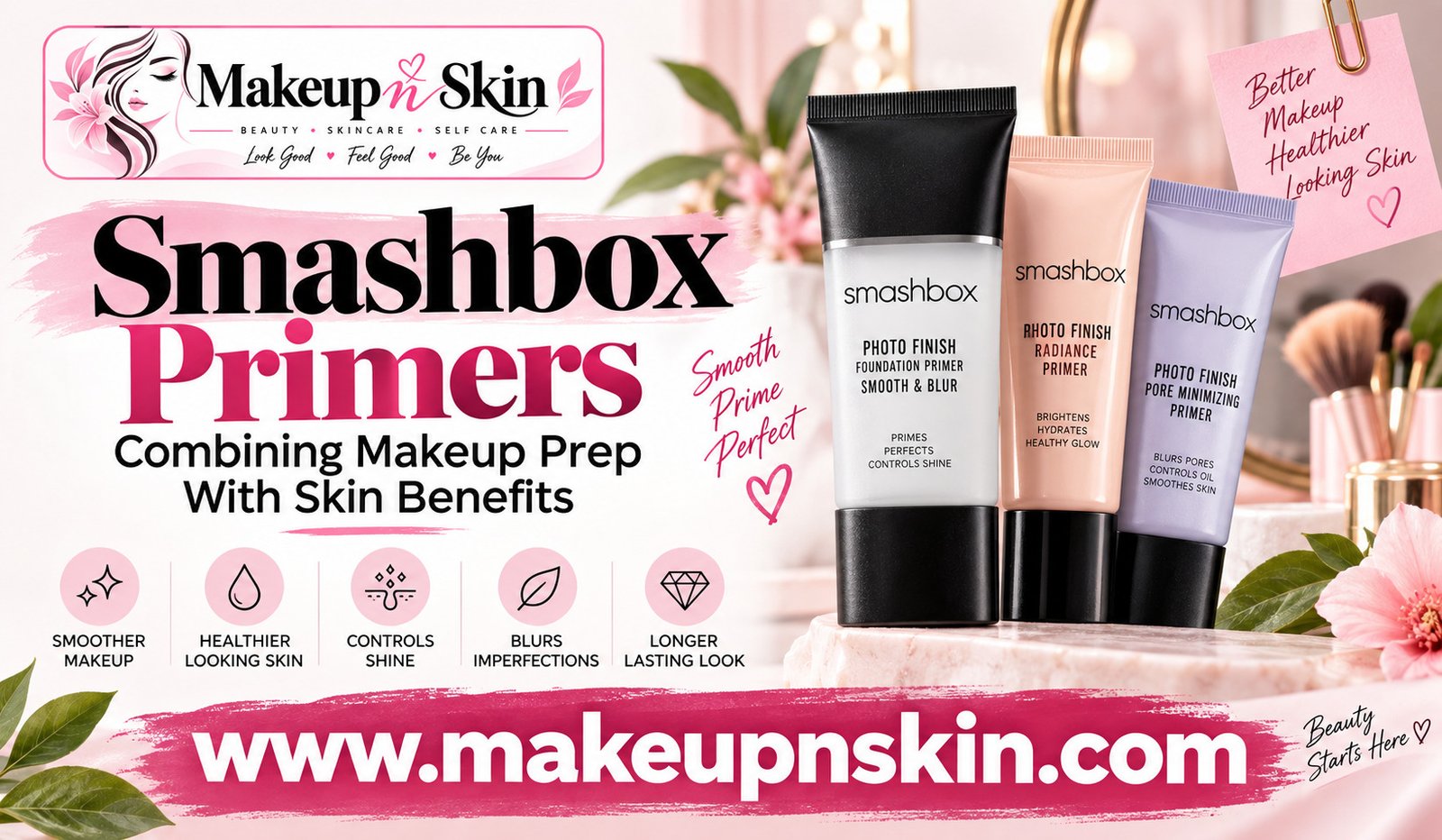
When you want your makeup to look smooth, fresh, and well blended, the products you use before foundation matter just as much as the makeup itself. A primer can create a more even surface, help makeup apply more comfortably, and influence how your finished look wears throughout the day. Smashbox Primers have become known for combining makeup preparation with formulas designed to address different skin and complexion needs.
Instead of treating primer as an optional extra, you can use it as the bridge between your skincare routine and makeup. Depending on your skin type and the finish you want, the right primer can help control shine, soften the appearance of pores, add hydration, or create a smoother base.
Why Primer Matters Before Makeup
Your foundation does not always sit evenly on bare skin. Dry areas, excess oil, visible pores, and uneven texture can affect the way makeup looks once it has been applied.
A primer gives you an additional layer between skincare and makeup. You can use it to create a more consistent surface before applying foundation, concealer, or other complexion products.
Think about what happens when you paint on an uneven surface. The final result may still look good, but preparation can make the application much easier. Makeup works in a similar way.
With the right primer, you can make your foundation glide more smoothly instead of repeatedly working it into areas where the product catches or separates.
Smashbox Primers Offer Different Makeup Prep Options
One reason you may consider Smashbox Primers is the variety of finishes and formulations associated with the brand’s primer range.
Not every person wants the same result from a primer. You might prefer a soft, matte appearance if your skin becomes shiny during the day. Someone else may want a more hydrated or radiant base.
This means you should choose a primer according to your complexion and makeup goals rather than simply picking the most popular formula.
If you regularly change your foundation, you may also notice that certain primers work better with particular formulas. Testing how your primer and foundation interact can help you find a combination that applies evenly and wears comfortably.
Smoothing the Appearance of Pores
Visible pores are one of the concerns that can become more noticeable after foundation application. Heavy makeup does not always hide texture. In some cases, it can make uneven areas look more obvious.
A smoothing primer can help create a more refined-looking surface before you apply complexion products. You can concentrate it around areas where pores are more visible rather than applying a thick layer across your entire face.
This approach also helps you avoid using unnecessary amounts of product.
Instead of covering your skin with several layers of foundation, you can prepare specific areas first and then apply your makeup in a thinner, more controlled layer.
Supporting a More Comfortable Makeup Base
Your skin does not feel the same every day. Weather, indoor heating or cooling, skincare products, and your daily routine can all affect how your complexion feels.
If your skin feels dry before makeup application, a primer with a more moisturizing feel can make the base feel more comfortable. On the other hand, if your skin becomes oily quickly, a formula designed for a more controlled finish may be preferable.
This is where the skin-focused side of Smashbox Primers becomes useful. Rather than viewing primer only as a product that makes foundation last longer, you can select one that complements what your skin needs at the beginning of your makeup routine.
Choosing a Primer for Your Skin Type
Your skin type should influence your primer choice.
If you have oily skin, you may prefer a primer that creates a less shiny finish. Apply it mainly to areas such as your forehead, nose, and chin if those areas tend to become oily first.
If you have dry skin, look for a primer with a comfortable, moisturizing texture. Applying a small amount over properly moisturized skin can help your foundation look less dry or patchy.
If you have combination skin, you do not necessarily need to use one primer everywhere. You can apply a more mattifying formula to oily areas and a more hydrating product to areas that feel dry.
If your main concern is uneven texture, a smoothing primer can become the focus of your preparation routine.
This targeted approach can be more practical than expecting one product to solve every complexion concern.
How Skin Benefits Fit Into Your Makeup Routine
The idea of makeup providing skincare-style benefits has become increasingly common. However, primer should not automatically replace your regular skincare routine.
You should still cleanse your skin and use the skincare products appropriate for your needs. Primer comes afterward and prepares the surface for makeup.
For example, you might begin with cleanser, followed by moisturizer and sunscreen during the daytime. Once those products have settled, you can apply primer before moving on to foundation.
This order allows each product to serve its own purpose instead of asking your primer to perform the entire skincare routine.
Getting Better Results With Less Product
One common mistake is applying too much primer.
You generally do not need a thick coating. A small amount spread across the areas where you need it can be enough to prepare your complexion.
Start with a pea-sized amount and add more only if necessary. Give the primer a short moment to settle before applying foundation.
You can also press or gently smooth the product into the skin rather than aggressively rubbing it. This can help maintain an even layer and reduce the chance of disturbing the skincare underneath.
The goal is to create a thin, consistent base rather than another heavy layer.
Primer Can Influence Your Foundation Finish
Your foundation determines much of your final complexion, but primer can influence how that foundation behaves.
A smoothing primer may help your foundation appear more even over textured areas. A hydrating primer can contribute to a more comfortable-looking base when your skin feels dry. A mattifying option may help create a less glossy appearance.
This means you should consider your primer and foundation as a pair.
If your foundation already has a very dewy finish, you may not want an extremely radiant primer underneath it. Similarly, if you use a matte foundation and your skin is dry, adding a comfortable hydrating layer underneath may create a more balanced result.
Applying Smashbox Primers Correctly
You can keep the application process simple.
First, complete your normal skincare routine and allow the products to settle. Next, take a small amount of Smashbox Primers and apply it to the areas where you want the most preparation.
Use your fingertips to spread the product evenly. Pay additional attention to the center of your face or areas with visible texture.
Once the primer has settled, apply your foundation. Start with a small amount and build coverage gradually.
This technique gives you more control and can help prevent the heavy, layered appearance that sometimes occurs when too much product is used.
Do You Need Primer Every Day?
You do not necessarily need primer every time you wear makeup.
If your foundation already applies smoothly and you are happy with its finish, you may decide to skip primer. On days when you want extra smoothing, longer-wearing makeup, additional hydration, or shine control, primer can become more useful.
You can also use it selectively. For example, if your cheeks are comfortable but your T-zone becomes oily, you can apply primer only to your forehead, nose, and chin.
This makes your routine faster and keeps product usage reasonable.
How to Find the Right Smashbox Primer
When choosing among Smashbox Primers, start with your main concern rather than the product’s popularity.
Ask yourself what you want your makeup base to accomplish.
Do you want your complexion to appear smoother? Do you want to manage visible shine? Does your skin feel dry before makeup? Are you looking for a particular finish?
Once you answer those questions, you can narrow your choices more easily.
You should also consider the makeup you normally wear. A lightweight everyday foundation may require a different preparation approach than a full-coverage base for an event.
Testing a small amount first can also help you see how the primer behaves with your existing skincare and foundation.
Makeup Prep Can Be Part of Better Skin Care Habits
Although primer is primarily a makeup product, using it thoughtfully can encourage you to pay more attention to how your skin behaves.
You may notice that your complexion needs more hydration during certain seasons or that your T-zone becomes oilier during warmer weather. These observations can help you adjust your makeup preparation instead of using exactly the same routine every day.
At the same time, you should remember that primer does not replace sunscreen, moisturizer, or other skincare products.
Its role is to prepare your skin for makeup while offering additional characteristics that can complement your complexion.
Final Thoughts
Smashbox Primers give you a way to combine makeup preparation with complexion-focused features. Instead of simply adding another layer before foundation, you can choose a formula based on how you want your skin and makeup to look and feel.
Whether your priority is smoothing, hydration, shine control, or creating a more polished makeup base, the key is to match your primer with your individual needs. You also do not need to apply a large amount or use primer across your entire face.
When you prepare your skin carefully, choose compatible products, and apply makeup in controlled layers, your routine can feel simpler and more intentional. A well-selected primer can become a practical step between skincare and makeup, helping you create the kind of base you want before the rest of your look comes together.