
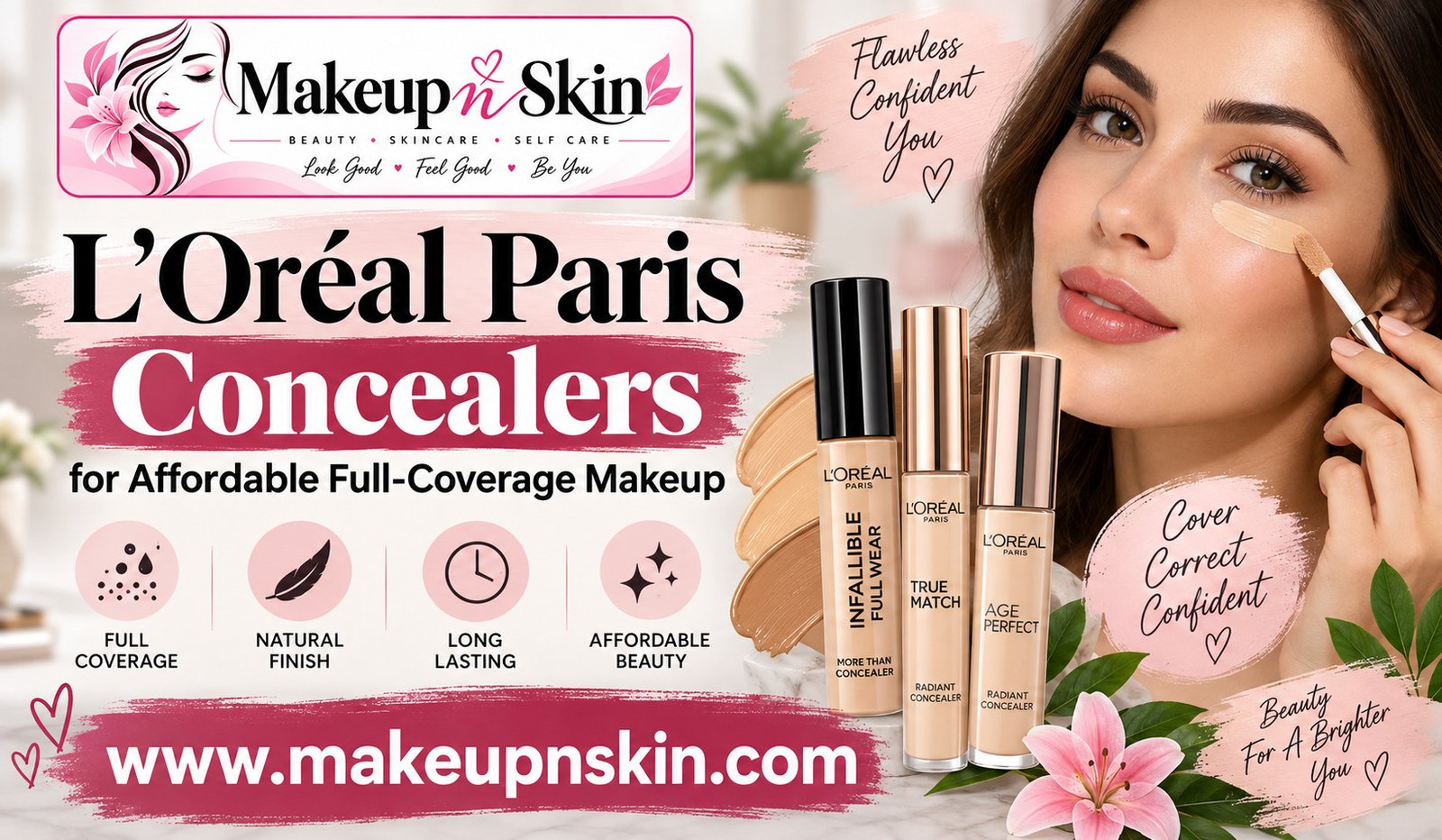
When you want your makeup to look polished without spending a fortune, concealer can make a noticeable difference. You can use it to soften the appearance of dark circles, cover blemishes, even out redness, and create a more uniform-looking complexion. Among the many affordable options available, L’Oréal Paris Concealers have become a familiar choice for people who want buildable coverage without moving into luxury makeup prices.
You do not need a large collection of complexion products to create a smooth makeup base. With the right concealer, you can target specific areas and keep the rest of your makeup simple. L’Oréal Paris offers several concealer formulas and shades designed for different coverage preferences, skin tones, and makeup routines.
Why L’Oréal Paris Concealers Stand Out
If you are shopping for an affordable concealer, you probably want more than simple coverage. You may also look for comfortable wear, easy blending, a suitable shade range, and a finish that works with your foundation or other base products.
L’Oréal Paris has built a strong presence in the accessible beauty market, making its complexion products easy for many shoppers to find. Its concealers are designed for everyday makeup as well as occasions when you want a more perfected appearance.
You can also adjust the amount of coverage depending on how you apply the product. A small amount can work for targeted touch-ups, while additional layers can provide a more noticeable effect where you need it.
Full Coverage Without a Luxury Price
Full-coverage makeup does not always have to come with a high price tag. When you choose L’Oréal Paris Concealers, you can create a fuller-looking base while keeping your overall beauty budget under control.
This can be particularly useful if you use concealer regularly. You may go through complexion products faster than other makeup items, especially when you apply them daily. Choosing an affordable formula means you can replace it without making a major addition to your beauty expenses.
You can also use concealer strategically rather than applying a heavy layer across your entire face. Apply it under your eyes, around your nose, over visible blemishes, or anywhere you want additional coverage. This approach can give you a more balanced finish while allowing your natural skin to remain visible in other areas.
Choosing the Right Shade
Your concealer shade can have a major effect on how natural your makeup looks. Before buying, consider what you want the product to accomplish.
If you are covering blemishes or redness, a shade close to your foundation and natural skin tone is generally the most practical choice. This helps the concealer blend into the surrounding skin instead of creating obvious patches.
For under-eye coverage, you may prefer a shade that is slightly lighter than your complexion. However, choosing a concealer that is dramatically lighter can make the under-eye area look unnatural or overly bright.
You should also consider your undertone. Your skin may lean warm, cool, neutral, or somewhere between these categories. Comparing shades in natural light can help you make a more reliable choice than judging them under strong indoor lighting.
Getting Better Results Under the Eyes
Dark circles can be one of the main reasons you reach for concealer. However, applying too much product can sometimes make the area look heavy or emphasize fine lines.
Start with a small amount. Place the product where you see the most darkness instead of automatically covering the entire under-eye area with a thick layer.
You can then blend outward using a damp makeup sponge, concealer brush, or clean fingertip. If you still want more coverage, add another thin layer instead of applying a large amount at once.
Setting the area lightly with powder can help reduce unwanted movement. You should use only enough powder to keep the concealer in place, particularly if your under-eye area tends to look dry.
Covering Blemishes and Redness
You can also use L’Oréal Paris Concealers to target occasional blemishes and areas of redness. The key is precision.
Rather than spreading concealer over a large area, place a small amount directly over the spot. Give the product a moment to settle, then gently tap around the edges so the coverage merges with your foundation.
Avoid excessive rubbing. Rubbing can move the product away from the area you are trying to cover and can make your makeup look uneven.
If you have redness around the nose or cheeks, you can use a thin layer of concealer after applying foundation. This allows you to build coverage only where it is actually needed.
How to Make Concealer Look Natural
Full coverage does not have to mean a heavy-looking finish. Your application technique can make a significant difference.
Begin with properly prepared skin. Cleanse and moisturize according to your normal routine, then allow skincare products to settle before applying makeup. If your skin is dry, applying concealer over flaky areas without preparation can make the texture more noticeable.
Use a thin first layer and blend it carefully. You can always add more product later. This gives you greater control over the final result.
Another useful technique is to avoid applying the same amount of concealer everywhere. You may need more coverage on a blemish than on the center of your forehead, for example.
Pairing Concealer With Foundation
You can use concealer before or after foundation depending on your routine and the type of coverage you want.
If you apply foundation first, you may discover that you need less concealer than expected. Your foundation may already reduce the appearance of minor discoloration, allowing you to reserve concealer for areas that still need attention.
Alternatively, you can use concealer first for targeted correction and then apply a light layer of foundation. This can work well when you want to maintain coverage without making your entire complexion look heavily layered.
There is no single application order that works for everyone. Your preferred method can depend on your skin, foundation formula, and the finish you want.
Choosing a Formula for Your Skin
Your skin type should also influence your concealer choice. If your skin tends to become oily, you may prefer a formula that provides reliable coverage without feeling excessively creamy or slippery.
If your skin is dry, a comfortable, blendable formula can be more appealing. Preparing the skin properly before makeup can also improve how the concealer sits throughout the day.
For combination skin, you may need to adjust your application technique depending on the area of your face. Your under-eye area might require a different approach from your forehead or nose.
You should also think about your lifestyle. If you spend long hours outside or have a busy day, you may prioritize lasting coverage. If you mostly wear makeup for short periods, comfort and easy application may matter more.
Affordable Makeup for Everyday Routines
One of the biggest advantages of affordable complexion products is their practicality. You can keep L’Oréal Paris Concealers in your everyday makeup bag without treating them like an occasional luxury item.
You can create several different looks using the same concealer. For a quick morning routine, you might apply it under your eyes and over a few blemishes before adding mascara and lip color.
For a more polished look, you can combine it with foundation, blush, bronzer, and setting powder. This flexibility makes concealer one of the most useful products in a basic makeup collection.
You can also experiment with application methods without feeling that every mistake is expensive. A sponge may give you one finish, while a brush can provide more concentrated coverage.
Mistakes to Avoid
Even a good concealer can look uneven if you apply too much or choose an unsuitable shade.
One common mistake is selecting a shade based only on how bright you want your under-eye area to look. Instead, consider your actual skin tone and undertone first.
Another mistake is layering too much product over a blemish. More concealer does not automatically mean better coverage. Excess product can draw attention to texture.
You should also avoid blending aggressively. Gentle tapping usually gives you better control over concentrated coverage.
Finally, remember that makeup does not need to completely erase every natural feature of your skin. A realistic complexion can still look polished.
Making the Most of Your Concealer
To get the best value from L’Oréal Paris Concealers, think beyond simply hiding imperfections. You can use the product to brighten selected areas, sharpen the appearance of your makeup, and create more definition.
For example, you can apply a small amount around the edges of your lips before lipstick to create a cleaner-looking outline. You can also use a slightly lighter concealer to subtly brighten the center of your face.
If you enjoy simple makeup, concealer can even reduce your dependence on heavy foundation. By applying it only where you need coverage, you can create a more lightweight complexion while still addressing visible discoloration.
Final Thoughts
L’Oréal Paris Concealers offer an accessible way for you to experiment with fuller-coverage complexion makeup without automatically moving toward expensive beauty products. Their versatility makes concealer useful for everything from quick everyday touch-ups to more polished makeup looks.
Your results will depend on more than the product itself. Choosing a suitable shade, preparing your skin, applying thin layers, and blending carefully can all help you achieve a smoother-looking finish.
Whether you want to disguise dark circles, cover occasional blemishes, or add extra coverage to selected areas, you can build your makeup routine around the amount of coverage you actually need. With the right technique, affordable concealer can become one of the most practical products in your makeup bag.