
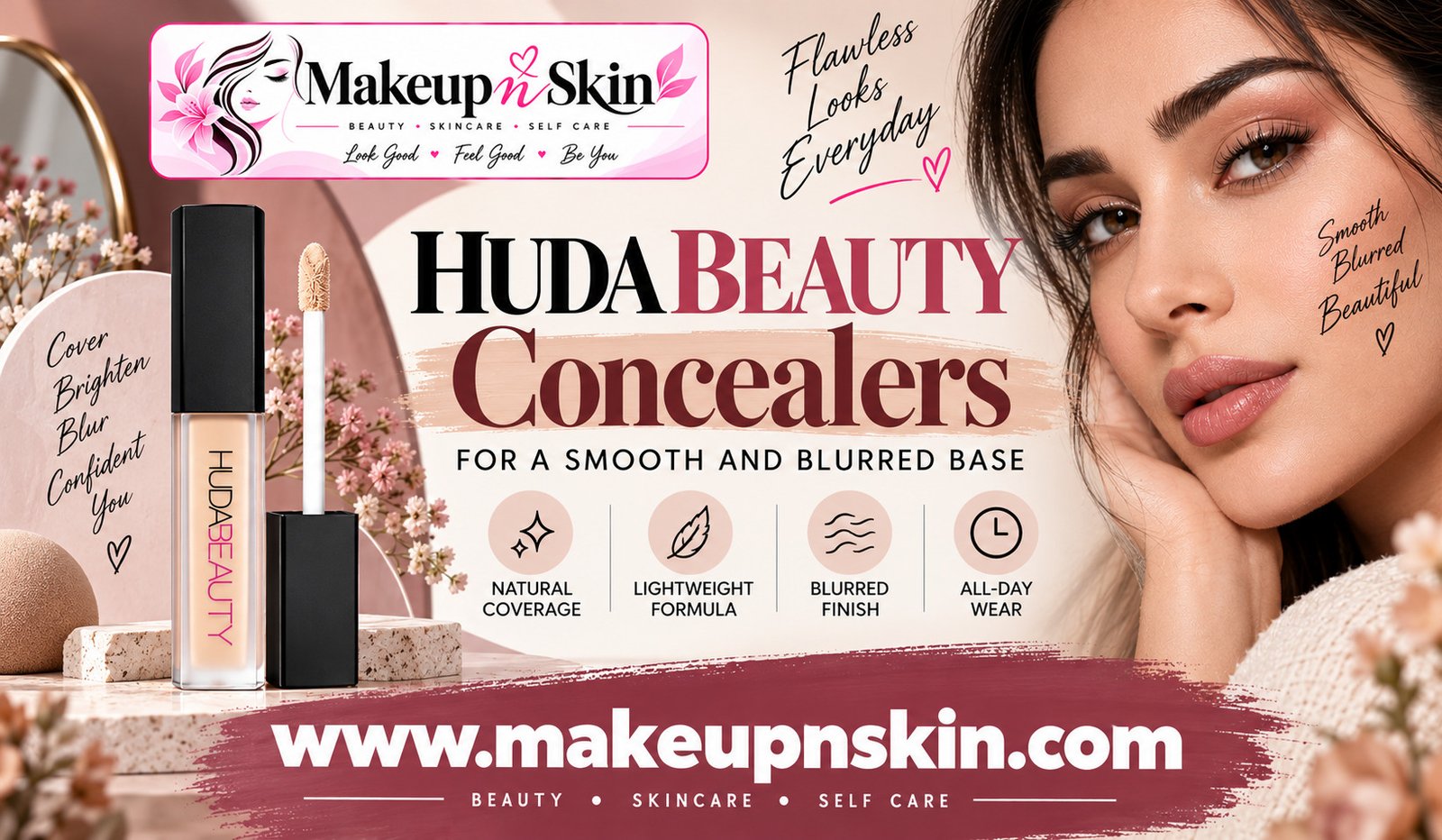
When you want your makeup to look polished without looking overly heavy, concealer can make a noticeable difference. You can use it to brighten your under-eye area, soften the appearance of blemishes, even out discoloration, or create a more defined complexion. The key is choosing a formula that works with your skin rather than simply adding more coverage.
Huda Beauty Concealers have attracted attention because they offer options designed to provide coverage while keeping the complexion looking refined. Whether you prefer a natural finish for everyday makeup or a more perfected look for special occasions, you can work these concealers into your routine in several ways.
In this guide, you will learn how to use Huda Beauty concealers effectively, how to choose a suitable shade, and how to create a smooth, softly blurred base without making your makeup look cakey.
Why Concealer Matters for a Smooth Base
You might think foundation does most of the work when you are creating an even complexion. However, concealer gives you more control over specific areas.
Instead of applying a thick layer of foundation everywhere, you can use concealer exactly where you need additional coverage. This approach can leave the rest of your skin looking more natural.
A good concealer can help you:
- Cover visible blemishes and marks
- Reduce the appearance of under-eye darkness
- Brighten selected areas of your face
- Even out uneven pigmentation
- Define the shape of your brows and lips
- Create a more polished makeup finish
The trick is not necessarily to use a large amount. You can often achieve a smoother result by applying a small quantity and building coverage gradually.
What Makes Huda Beauty Concealers Popular?
Huda Beauty has developed a strong presence in the makeup market, particularly among people who enjoy full-glam and highly perfected makeup looks. Its complexion products are often designed with coverage and finish in mind.
When you use Huda Beauty Concealers, you can adjust the intensity according to the area you are working on. Your under-eyes may require a different application technique from a blemish or an area of discoloration.
This flexibility makes concealer useful beyond simply hiding imperfections.
You can also combine concealer with foundation strategically. If your foundation already provides enough coverage on your cheeks or forehead, you do not need to add another thick layer of concealer there.
Choosing the Right Concealer Shade
Shade selection can make a major difference in how natural your makeup looks.
For under-eye coverage, you may want a shade that is close to your complexion or slightly brighter, depending on the result you want. A dramatically lighter shade can sometimes make dark circles appear more noticeable rather than hiding them.
For blemishes, you generally want a concealer that closely matches your foundation and surrounding skin.
You should also consider your undertone. Your skin may have warm, cool, neutral, or olive undertones, and selecting a concealer with a compatible undertone can make blending easier.
If you are shopping online, compare several shade descriptions and, when possible, check swatches on skin tones similar to yours. Your screen can alter how a shade appears, so online images should be treated as a reference rather than an exact match.
Prepare Your Skin Before Applying Concealer
Even the best concealer can struggle when applied over dry or poorly prepared skin.
Before starting your makeup, cleanse your face and follow your normal skincare routine. Give moisturizer enough time to settle before applying complexion products.
If your under-eye area tends to become dry, use a lightweight eye-area moisturizer rather than applying a thick layer of skincare immediately before makeup.
You should also avoid applying too much product underneath your eyes. Excess skincare can cause concealer to move around or settle into fine lines.
Once your skin feels comfortable and lightly hydrated, you are ready to begin.
How to Apply Huda Beauty Concealers
Your application technique can influence the final finish just as much as the formula itself.
Start with a small amount. Place the concealer only where you need coverage instead of covering the entire under-eye area with a thick layer.
For under-eyes, you can begin near the inner corner, where darkness is often more visible, and gently blend outward.
A damp makeup sponge can give you a softer finish because it distributes the product gradually. A concealer brush can provide more precise coverage when you are targeting blemishes or small areas.
You can also use your fingertip for certain areas. The warmth of your finger can help the product blend into the skin, although you should use a gentle tapping motion rather than rubbing.
If you need more coverage, allow the first layer to settle and then add a small amount to the specific area.
Creating a Blurred-Looking Finish
A blurred complexion does not necessarily mean completely covering every natural feature of your skin.
Instead, the goal is to create a visually even surface while keeping the makeup from looking thick.
You can achieve this by concentrating coverage in the center of your face and areas that need more attention. Blend the edges carefully so there are no obvious transitions between concealer, foundation, and bare skin.
After blending, take a moment to look at your complexion in natural light. If a particular area still needs coverage, add product only there.
This approach can help you avoid the heavy appearance that sometimes comes from repeatedly layering makeup across the whole face.
Using Concealer Under the Eyes
The under-eye area requires a slightly different approach because the skin is thinner and naturally contains folds and texture.
Start with a modest amount of product. Apply it where you see darkness instead of automatically covering the entire area.
Blend gently toward the outer corner. You can leave a little natural skin showing if the coverage already looks sufficient.
If your concealer tends to crease, wait briefly after blending and inspect the area. Use a clean fingertip or small brush to remove any excess product that has collected inside fine lines.
A very light application of setting powder can then help keep the product in place. You do not necessarily need a heavy layer of powder.
Concealing Blemishes and Discoloration
When you are covering a blemish, precision is more important than quantity.
Use a small brush to place concealer directly over the area. Gently tap around the edges to blend the product into the surrounding skin while keeping the center covered.
If you blend too aggressively across the blemish, you may remove the coverage you just applied.
For areas of discoloration, you can use a similar technique. Apply a thin layer, blend the edges, and add another layer only if necessary.
This method allows you to maintain a lighter overall complexion while still getting targeted coverage.
Should You Apply Foundation Before Concealer?
There is no single approach that works for everyone.
If your foundation already provides good coverage, applying it first can help you determine exactly where additional concealer is needed. You may discover that you need much less product than expected.
If you are using a lighter foundation or prefer a more targeted complexion routine, you can also apply concealer first in selected areas.
Try both approaches and pay attention to how your makeup behaves throughout the day. Your preferred order can depend on your foundation formula, skin type, and desired coverage.
Setting Huda Beauty Concealers Without Looking Dry
Setting powder can help prolong the wear of concealer, but using too much can work against a smooth finish.
After blending your concealer, allow it to settle. Then use a small fluffy brush or another preferred application tool to apply a thin layer of powder where needed.
You can focus on areas that crease easily rather than covering the entire face.
If you prefer a more skin-like finish, keep the powder minimal. A little shine can also make the complexion look more natural instead of completely flat.
Common Concealer Mistakes to Avoid
You can get better results by avoiding a few common habits.
Using too much product: More concealer does not automatically mean better coverage. Excess product can emphasize texture and creasing.
Choosing a very light shade: A concealer that is dramatically lighter than your complexion may create an unnatural contrast.
Skipping skin preparation: Dryness can make even a good concealer appear uneven.
Rubbing instead of tapping: Aggressive blending can move coverage away from the areas where you need it.
Applying too much powder: Heavy powder can make your under-eye area appear dry or textured.
Ignoring natural light: Makeup can look different under indoor lighting. Checking your complexion near a window can help you spot areas that need additional blending.
How to Make Your Concealer Last Longer
Your preparation and application habits can influence longevity.
Start with clean, moisturized skin and avoid applying excessive skincare immediately before makeup. Use thin layers of concealer and blend each layer carefully.
If you have oily skin, setting targeted areas with a small amount of powder may help reduce movement. If your skin is dry, keeping powder to a minimum can help preserve a more comfortable appearance.
During the day, avoid repeatedly adding more concealer over makeup that has already moved. Instead, gently remove excess product from the area before applying a tiny fresh layer.
Huda Beauty Concealers for Everyday and Glam Makeup
One reason concealer can be so useful is its versatility.
For everyday makeup, you can apply a small amount beneath your eyes and around areas where you want extra evening-out. Pairing it with a lightweight foundation or tinted base can give you a fresher appearance.
For a more dramatic makeup look, you can build coverage and use concealer to brighten the under-eyes, sharpen the edges of your brows, or clean up the area around your lips.
You can therefore adjust the same basic technique depending on where you are going and how much makeup you want to wear.
Key Takeaways
- Huda Beauty Concealers can be used for targeted coverage, brightening, and complexion refinement.
- Choosing a suitable shade and undertone can make your finished makeup look more natural.
- Start with a small amount and build coverage gradually.
- Proper skin preparation can improve the way concealer blends.
- Use tapping motions instead of aggressive rubbing when blending.
- Targeted setting powder can help reduce creasing without making the complexion look overly dry.
- A blurred-looking base usually comes from controlled application rather than heavy layers.
FAQs
Can you use Huda Beauty concealer without foundation?
Yes, you can apply concealer directly to selected areas when you want targeted coverage without wearing a full layer of foundation.
How much concealer should you apply under your eyes?
Start with a small amount and add more only where you still need coverage.
Can concealer make your skin look smoother?
Concealer can create the appearance of a more even complexion by reducing the visibility of discoloration, blemishes, and under-eye darkness.
Should you set concealer with powder?
You can use a small amount of powder on areas where concealer tends to crease or move, although setting is not always necessary.
How do you prevent concealer from looking cakey?
Use thin layers, prepare your skin properly, blend carefully, and avoid applying excessive powder.
Conclusion
Creating a smooth and blurred makeup base is less about covering every part of your face and more about controlling where you add coverage. Huda Beauty Concealers can fit into this approach by letting you target areas that need extra attention while keeping the rest of your complexion relatively light.
You can experiment with different application tools, coverage levels, shade choices, and setting techniques until you find what works with your skin. Start small, blend patiently, and build only where necessary. With the right technique, your concealer can help you achieve a polished complexion that still looks like skin.