
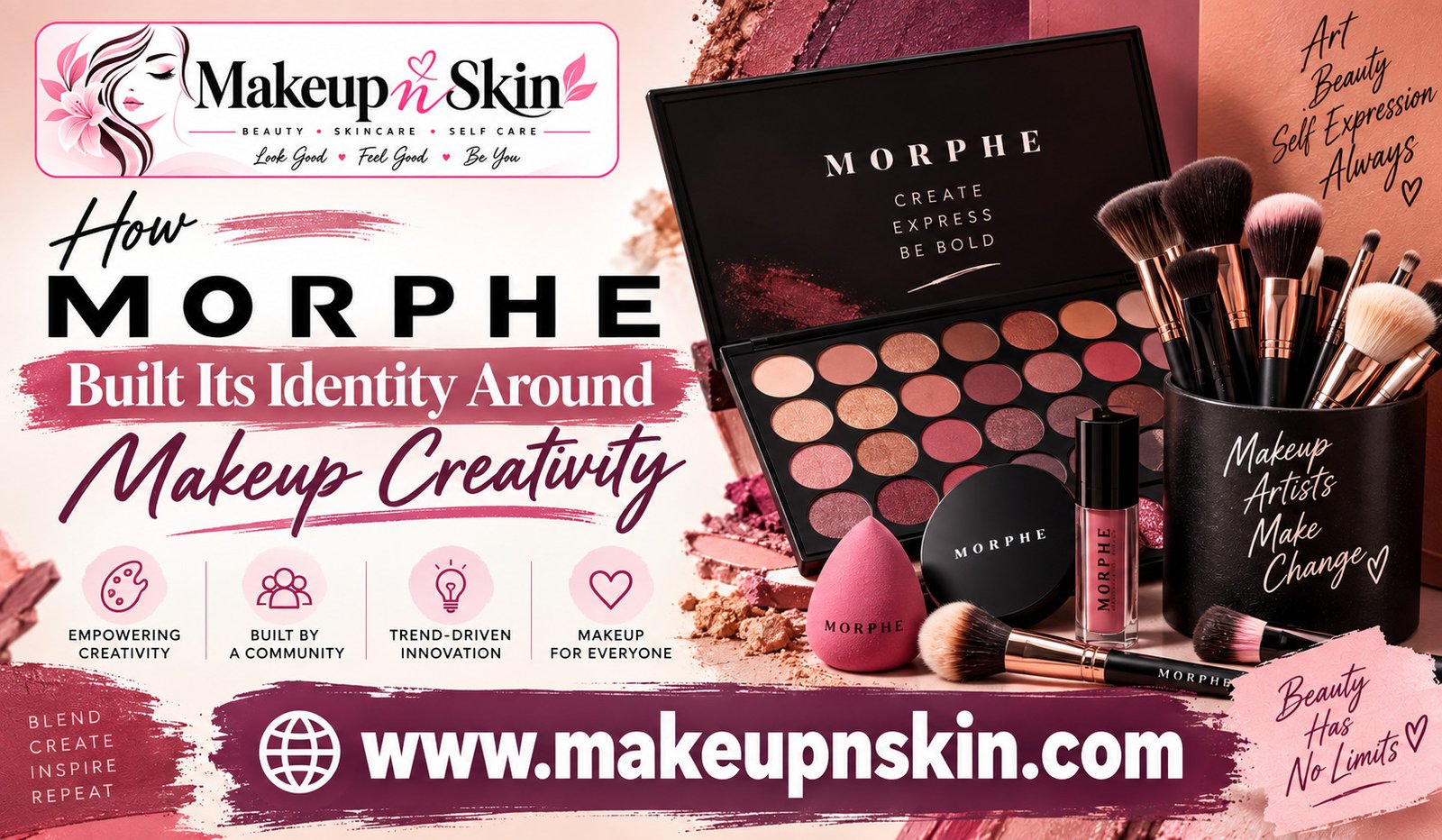
If you have ever explored the beauty world through bold eyeshadow palettes, detailed tutorials, or dramatic makeup looks, you have probably come across Morphe. The brand has become closely associated with experimentation, artistic expression, and the idea that makeup does not have to follow a fixed set of rules.
The story of how Morphe built identity around makeup creativity is not simply about selling brushes, palettes, or cosmetics. It is about creating a space where you can try new techniques, combine colors, follow trends, and develop your own style. Morphe’s identity has grown alongside the online beauty community, particularly through makeup artists, creators, and consumers who enjoy sharing their looks.
The Beginning of Morphe’s Creative Identity
When you look at Morphe’s development, one important feature stands out: creativity was not treated as something reserved for professional makeup artists. The brand helped present makeup as something you could explore regardless of your experience level.
Instead of making beauty feel overly formal, Morphe became associated with accessible tools and products that encouraged experimentation. Brushes, palettes, and other products gave you practical ways to recreate techniques that you might have previously seen only on professional makeup counters or editorial shoots.
This approach helped establish a recognizable personality. You were not simply buying makeup to complete a basic routine. You were buying products that could become part of an experimentation process.
That distinction became increasingly important as online beauty content expanded.
Why Makeup Creativity Became Central to the Brand
Makeup is naturally connected to creativity because you can change the way you use a product depending on your preferences. The same eyeshadow palette can produce a soft daytime look, a colorful artistic style, or a dramatic evening appearance.
Morphe leaned heavily into this flexibility.
Rather than communicating a single definition of beauty, the brand became associated with having options. Large eyeshadow palettes, extensive brush collections, and varied shades gave you room to experiment.
This also suited a generation of beauty consumers who were learning through tutorials. You could watch someone demonstrate a technique and then attempt it yourself.
The brand’s identity therefore developed around a simple but powerful idea: makeup can be a creative activity rather than simply a cosmetic routine.
The Role of Brushes and Tools
Before Morphe became widely recognized for colorful cosmetics and creator collaborations, brushes were an important part of its story.
For you as a makeup user, brushes can have a major effect on how a product is applied. Blending, contouring, highlighting, lining, and detailing all require different techniques and tools.
Morphe built visibility around offering numerous brush options, making professional-looking tools feel more approachable to everyday makeup users.
This mattered because tools could make creativity feel achievable.
You did not necessarily need years of professional experience to start practicing. You could learn a blending technique from a tutorial, pick up a suitable brush, and begin experimenting.
That relationship between education, tools, and experimentation became an important part of the brand’s identity.
Building a Strong Connection With Makeup Artists
Makeup artists have always played an important role in shaping beauty trends. They demonstrate techniques, introduce products, and influence how consumers understand makeup.
Morphe developed strong visibility among makeup artists and beauty creators, helping connect the brand with people who actively demonstrated cosmetic techniques.
For you, seeing a professional or experienced creator use a product can make it easier to understand its potential. A palette sitting on a store shelf tells you very little. A creator using the same palette to create several different looks tells a much larger story.
Morphe benefited from this type of demonstration.
The products became connected to action. You could see them being used, tested, blended, layered, and transformed into complete looks.
How Social Media Changed Morphe’s Reach
Social media played a major role in the growth of beauty culture, and Morphe developed its identity during this transformation.
Platforms such as YouTube and Instagram made makeup education much more accessible. Instead of relying entirely on magazines or beauty counters, you could learn techniques directly from creators.
Tutorials turned makeup into visual entertainment and education at the same time.
Morphe fit naturally into this environment because its products could be demonstrated easily. A creator could show you how a palette performed, explain a brush technique, or create an entire look using several products.
This created a connection between product discovery and creativity.
You could discover a Morphe product while watching a tutorial and immediately imagine what you might create with it. That connection helped the brand become part of the broader online makeup conversation.
Collaborations Helped Expand the Brand
Collaborations became another important element of Morphe’s identity.
Working with beauty creators and makeup personalities allowed the brand to connect products with recognizable creative voices. Instead of presenting every product through traditional advertising alone, collaborations gave consumers an opportunity to see how individual artists approached color and technique.
For you, this can make a collection feel more personal.
A creator collaboration can communicate a particular aesthetic, whether that involves neutral shades, bright colors, glamorous finishes, or dramatic eye makeup. You can then decide whether that style fits your own preferences.
These collaborations also reinforced the idea that makeup has many different interpretations.
There was not necessarily one correct way to use a palette. Different creators could approach similar products differently, demonstrating the flexibility of cosmetic products.
Morphe and the Appeal of Bold Makeup
One reason Morphe became recognizable in the beauty market was its association with expressive makeup.
Bold colors can make makeup feel more artistic. Bright blues, purples, pinks, oranges, and other strong shades can encourage you to move beyond conventional neutral looks.
However, creativity does not always mean using dramatic colors.
You can also use a neutral palette creatively by experimenting with placement, texture, blending, layering, and contrast. Morphe’s broader identity allowed both approaches to exist within the same beauty conversation.
The underlying message was that you could decide how far you wanted to take your makeup.
That freedom is important because creativity works differently for everyone.
How You Can See Morphe’s Identity in Its Products
When you examine Morphe products, you can often see how the brand connects products with experimentation.
Large palettes provide multiple shades within one collection. Different brush shapes allow you to approach application in different ways. Face products can be combined to create different levels of definition.
For you, this means a single product can potentially become part of several different looks.
A palette does not have to dictate one appearance. You can use a lighter shade for subtle definition, a deeper shade for contrast, or multiple colors for a more artistic result.
This flexibility is one reason the relationship between Morphe and creativity became so strong.
The brand was selling possibilities as much as individual cosmetic products.
The Importance of Community in Morphe’s Brand Story
Beauty communities have changed the way brands communicate with consumers.
You are no longer only receiving information from a company. You can see reviews, tutorials, recreations, comparisons, and personal experiences from thousands of other beauty enthusiasts.
Morphe grew within this environment.
The brand became part of conversations happening between creators and audiences. A makeup look could inspire another person, who could then create their own version and share it with others.
That cycle keeps creativity moving.
It also changes the relationship between a brand and its customers. Consumers can become participants rather than passive viewers.
For Morphe, this community-driven culture supported an identity based on experimentation and sharing.
What Morphe’s Approach Means for Beauty Consumers
The most interesting part of Morphe’s identity is that you do not have to be a professional artist to participate in it.
You can start with a simple makeup look and gradually learn more techniques. You can copy a tutorial, modify it, or ignore the tutorial completely and create something different.
That freedom is at the heart of creative makeup.
Morphe’s brand story demonstrates how a cosmetics company can build recognition by connecting its products with a larger activity. Instead of focusing only on what a product is, the brand has often emphasized what you can do with it.
That difference can make cosmetics feel more engaging.
Key Takeaways
- Morphe became strongly associated with makeup experimentation and artistic expression.
- Brushes and tools played an important role in making techniques more approachable.
- Makeup artists and online creators helped demonstrate the possibilities of Morphe products.
- Social media made beauty tutorials and product discovery more interactive.
- Collaborations connected the brand with different creative styles.
- Large palettes and varied tools supported experimentation.
- Morphe’s identity reflects the idea that makeup can be personal, flexible, and creative.
FAQs
Why is Morphe associated with makeup creativity?
Morphe is associated with makeup creativity because its brand identity has emphasized experimentation, varied cosmetic options, makeup tools, artists, and online beauty creators.
How did social media help Morphe?
Social media helped Morphe reach beauty consumers through tutorials, creator content, product demonstrations, and user-generated makeup inspiration.
Why are makeup brushes important to Morphe?
Makeup brushes are important because they provide different tools for techniques such as blending, contouring, detailing, and applying different cosmetic products.
Did Morphe focus only on professional makeup artists?
No, Morphe’s brand positioning also made makeup experimentation accessible to everyday beauty consumers interested in learning and creating different looks.
What makes makeup creative?
Makeup becomes creative when you experiment with colors, textures, techniques, placement, and combinations to develop a look that reflects your personal preferences.
Conclusion
The story of how Morphe built identity around makeup creativity shows how a beauty brand can become connected to a much larger cultural movement. By linking products with artists, tutorials, tools, collaborations, and online communities, Morphe helped position makeup as something you could actively explore.
For you, that idea can be as simple as trying a new eyeshadow combination or learning a blending technique you have never attempted before. You do not need to follow a fixed formula. The creative value of makeup comes from having the freedom to experiment, adapt, and make the final look your own.