
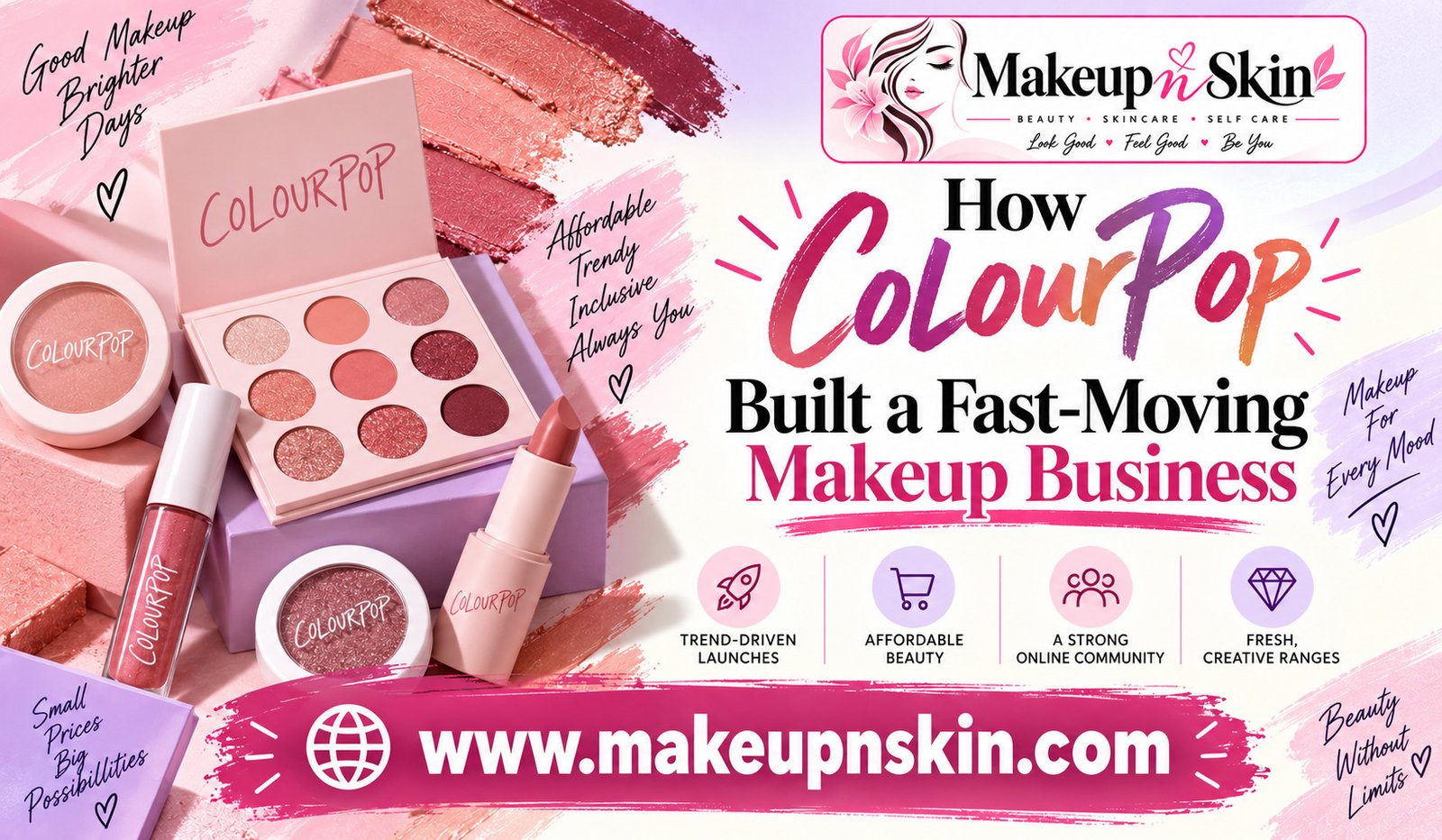
When you look at how modern beauty brands grow, you may notice that some companies move much faster than traditional cosmetics businesses. They launch products quickly, respond to customer interests almost immediately, and use social media as an important part of their marketing. ColourPop is a strong example of this approach.
If you study how ColourPop built fast makeup business operations, you can see a clear combination of affordable pricing, rapid product development, digital marketing, online community building, and trend-focused launches. Instead of relying mainly on traditional beauty counters and long product cycles, the brand developed a business model designed around speed and direct customer interaction.
For you as a beauty shopper, this approach can make ColourPop feel different from older makeup companies. There is usually something new to discover, whether it is a new eyeshadow collection, lipstick shade, blush, collaboration, or limited-edition release.
A Business Designed Around Speed
One of the biggest lessons you can take from ColourPop is the importance of reducing the time between an idea and a finished product.
Traditional beauty companies can spend considerable time developing, testing, packaging, marketing, and distributing new products. ColourPop became known for moving at a much faster pace. Its business model was built around frequent launches and a strong connection between customer demand and product development.
This speed helped the company stay connected to beauty trends.
For example, when a particular color, finish, or makeup style became popular online, a fast-moving brand could respond while consumers were still interested in it. You did not have to wait for a seasonal collection months later.
The strategy also created a sense of anticipation. If you regularly followed the brand, you could expect new products and collections to appear frequently.
Affordable Products Made the Brand Accessible
Price played another major role in ColourPop’s growth.
If you are interested in experimenting with makeup, expensive products can make that difficult. A single premium eyeshadow palette or lipstick may require a significant purchase decision. ColourPop positioned many of its products at more accessible prices, allowing customers to try different shades and formulas without making the same financial commitment.
This was particularly useful for younger beauty shoppers and people who enjoyed experimenting with trends.
Affordable pricing also supported a different purchasing mindset. Instead of buying one product and using it for years, you could purchase several shades or try a new collection.
That encouraged experimentation, which naturally worked well with ColourPop’s frequent product launches.
Social Media Became a Major Growth Engine
You cannot understand ColourPop’s business model without looking at social media.
Instagram, YouTube, TikTok, and other digital platforms changed the way you discover makeup. Instead of relying entirely on magazine advertisements or television commercials, you can now see products demonstrated by creators, makeup artists, celebrities, and everyday consumers.
ColourPop benefited from this environment.
Its colorful products, frequent launches, collaborations, and visually appealing packaging were well suited to social media. A new product could quickly appear in makeup tutorials, short videos, product reviews, swatches, and beauty discussions.
This created a cycle:
New product → social media attention → customer interest → sales → user-generated content → more attention.
For you as a consumer, this means the marketing does not always feel like a traditional advertisement. You may discover a ColourPop product because someone is showing how it looks on different skin tones or demonstrating how to use it.
Limited Releases Created Urgency
Another important part of the strategy was the use of limited-edition products and collections.
When you know that a product may not remain available forever, your purchasing decision can change. You may be more willing to buy it immediately rather than waiting several weeks.
ColourPop used this sense of urgency alongside frequent launches and collaborations.
Limited collections also gave customers a reason to keep checking the website and social media accounts. Even if you had recently purchased makeup, a new collection could create another reason to visit.
This approach helped turn product discovery into a recurring habit.
At the same time, limited releases allowed the company to experiment. A particular concept could be introduced to customers without requiring it to become a permanent part of the product range.
Collaborations Expanded Its Reach
Collaborations became another important element of ColourPop’s marketing strategy.
When a beauty brand works with a celebrity, entertainment property, influencer, or recognizable character, it can reach audiences beyond traditional makeup shoppers.
You may already have an emotional connection with a particular franchise, celebrity, or creator. A makeup collection connected to that interest can make the product more appealing even before you consider the formula itself.
For ColourPop, collaborations also created highly shareable content. Customers could post collection reveals, unboxing videos, swatches, and makeup looks.
That meant a collaboration could function as both a product launch and a marketing event.
Direct-to-Consumer Selling Reduced Distance
ColourPop also benefited from selling directly to consumers through digital channels.
When you shop through an online beauty store, the brand has more opportunities to communicate directly with you. It can show product information, new releases, collections, tutorials, customer reviews, and promotional offers in the same environment.
Direct online selling can also provide brands with valuable information about customer behavior.
A company can observe which products receive attention, which shades sell quickly, and which collections generate strong interest. Those insights can help inform future decisions.
This is particularly useful for a fast-moving makeup company because speed depends on making decisions based on current demand rather than relying only on older market research.
Product Variety Encouraged Experimentation
ColourPop did not limit itself to one type of makeup.
You can find products across categories such as eyes, lips, face, and complexion. Within those categories, there are often different colors, textures, finishes, and product formats.
That variety supports the company’s fast-launch model.
Imagine that you purchase one lipstick and enjoy it. A new shade may then catch your attention. After that, you might notice a matching blush or eyeshadow collection.
The products can therefore encourage customers to explore beyond their original purchase.
For you, this creates a beauty-shopping experience that feels less like buying a single essential item and more like discovering a constantly changing selection.
Colour Trends Became Business Opportunities
Makeup trends can change surprisingly quickly.
One year, bold eyeshadow may dominate social media. Later, minimal makeup, glossy lips, cream blush, or another aesthetic may become more popular.
A company operating with a traditional product cycle may struggle to respond quickly. A fast-moving company has an opportunity to turn these changes into new products or marketing campaigns.
This is another reason the question of how ColourPop built fast makeup business operations is interesting.
The company did not simply sell makeup. Its model was closely connected to the speed at which beauty culture changed online.
When you see a trend on social media, you may expect brands to respond quickly. ColourPop’s business structure was well suited to that expectation.
A Strong Online Community Supported Growth
Community is another part of the story.
You may have noticed that beauty consumers often do more than purchase products. They share opinions, compare shades, create tutorials, post reviews, and recommend products to friends.
This activity can become extremely valuable to a digital-first beauty brand.
When customers create their own content, they help demonstrate how products look and work in real situations. Swatches and makeup tutorials can sometimes answer questions that a traditional product description cannot.
ColourPop benefited from this culture of participation.
Instead of treating customers only as buyers, the brand existed within a wider online beauty conversation.
Manufacturing and Operational Efficiency Mattered
Marketing alone cannot create a fast-moving makeup business.
Behind frequent product launches, a company needs efficient manufacturing, packaging, inventory management, quality control, and distribution.
ColourPop’s connection to Seed Beauty has been an important part of the company’s operational story. Seed Beauty was established by ColourPop’s founders and developed a model focused on helping beauty brands bring products to market efficiently.
For you as a customer, much of this work happens behind the scenes. You simply see a new product appear online.
However, the ability to repeatedly introduce new products requires a supply chain capable of supporting that pace.
Why the Model Connected With Modern Beauty Shoppers
The success of the model can be understood through several consumer behaviors.
You want variety. You want affordable options. You may discover products through social media rather than traditional advertising. You may also enjoy trying something new instead of repeatedly buying the same product.
ColourPop’s strategy connected these behaviors.
Its frequent releases created excitement. Affordable prices reduced the barrier to experimentation. Digital marketing made products easy to discover, while collaborations and limited collections added novelty.
Together, these elements created a shopping experience designed around discovery.
What You Can Learn From ColourPop’s Strategy
If you are studying the beauty industry or thinking about how modern consumer brands grow, ColourPop offers several useful lessons.
First, speed can be a competitive advantage when consumer tastes change quickly.
Second, affordable pricing can encourage experimentation, especially when a product category involves many colors and styles.
Third, social media can become part of the product’s marketing ecosystem, rather than simply another advertising channel.
Fourth, frequent launches can keep customers engaged, particularly when each release offers something visually or creatively different.
Finally, operational efficiency matters just as much as branding. A company cannot consistently launch products quickly without the systems needed to develop, produce, and distribute them.
Conclusion
When you examine how ColourPop built fast makeup business operations, you can see that its growth was not based on one simple trick. The company combined accessible pricing, rapid product development, digital-first marketing, social media engagement, collaborations, limited releases, and an efficient operational structure.
For you as a modern beauty consumer, this model has changed what you may expect from a makeup brand. New products can arrive quickly, trends can influence collections almost immediately, and social media can play a major role in deciding what catches your attention.
ColourPop’s story ultimately shows how a beauty company can build its identity around speed, experimentation, and online culture. Instead of asking customers to wait for the next major seasonal release, the brand created an environment where there was often something new to explore.