
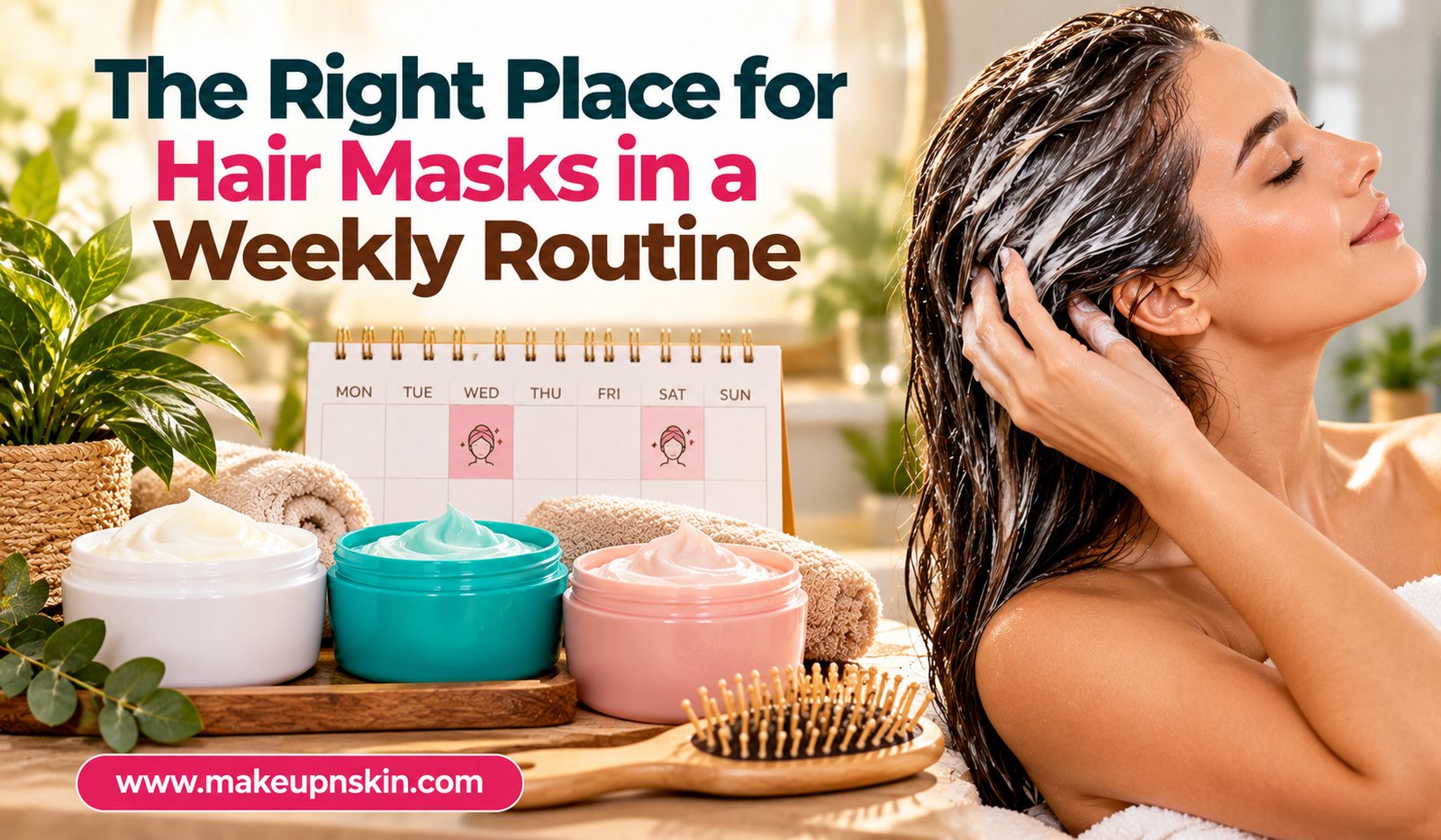
Haircare routines are becoming increasingly detailed as consumers look for better ways to manage dryness, frizz, roughness and damage caused by everyday styling. While shampoo and conditioner remain the foundation of most routines, hair masks have gained attention as an additional treatment that can provide more intensive conditioning.
A hair mask does not necessarily need to be used every time someone washes their hair. In fact, using it at the right point in a weekly routine can be more useful than applying it too frequently. The ideal approach depends on hair texture, washing habits, styling practices and the condition of the hair.
For people who colour their hair, use heat regularly or struggle with dry ends, adding a mask once or twice a week may provide an extra layer of conditioning. However, people with fine or oily hair may need a lighter approach. Understanding where a mask fits into the weekly routine can help prevent both under-conditioning and unnecessary product buildup.
What Is the Purpose of a Hair Mask?
A hair mask is generally designed to provide more intensive conditioning than a standard everyday conditioner. Depending on the formula, a mask may focus on moisture, softness, smoothness, strengthening support or improving manageability.
A regular conditioner is normally used after shampoo and is intended to become part of the ordinary washing routine. A mask, in comparison, is usually treated as an occasional treatment. It can be particularly useful when the hair feels rough, dry or difficult to detangle.
The word “mask” can sometimes make a product sound like a completely separate category of haircare, but the basic idea is relatively simple. It is an additional conditioning step that can be adjusted according to what the hair needs.
Why Weekly Use Can Make Sense
Hair goes through repeated stress during the week. Washing, brushing, exposure to the sun, pollution, heat styling and friction from clothing or bedding can all affect how hair looks and feels.
A weekly mask can act as a planned conditioning session rather than something used only when the hair becomes extremely dry. For many people, this makes it easier to maintain softness and manageability.
However, weekly use is not a universal requirement. Someone with naturally fine, short and healthy hair may not need intensive treatment every week. On the other hand, someone with thick, coarse, curly, bleached or chemically treated hair may find that regular deep conditioning is more helpful.
The important factor is not the number of times a product is used but how the hair responds.
Where Should a Hair Mask Fit Into the Routine?
For most rinse-out hair masks, the logical place is after shampooing. Shampoo removes dirt, excess oil and styling residue, leaving the hair ready for conditioning.
After shampoo, excess water can be gently squeezed from the hair before the mask is applied. This can make it easier to distribute the product through the lengths without unnecessarily diluting it.
The mask should then be left on for the amount of time recommended by the manufacturer. Leaving a product on significantly longer does not automatically produce better results.
A simple weekly sequence can look like this:
- Shampoo and rinse thoroughly.
- Gently remove excess water from the hair.
- Apply the mask through the appropriate sections of the hair.
- Leave it on according to the product instructions and rinse thoroughly.
For many people, this can be enough. There is no need to turn a weekly mask treatment into a long, complicated routine.
Hair Mask vs. Conditioner
One of the biggest questions surrounding hair masks is whether they should replace regular conditioners. The answer depends on the individual product and hair type.
Conditioner is generally intended for frequent use and helps improve softness, detangling and manageability after shampoo. A mask is usually more intensive and may have a richer formulation.
| Haircare Step | Main Purpose | Typical Frequency |
| Shampoo | Cleanses hair and scalp | According to washing routine |
| Conditioner | Regular conditioning | Most wash days |
| Hair mask | More intensive conditioning | Weekly or as needed |
| Leave-in treatment | Ongoing conditioning and styling support | Depends on product |
Some masks can be used instead of conditioner on treatment days, particularly if the manufacturer recommends this approach. Others may work best as an occasional treatment alongside a regular conditioner.
Rather than automatically using both together, consumers should check the product directions and observe how their hair feels afterward.
The Best Day to Use a Hair Mask
There is no scientifically required “mask day” that applies to everyone. However, choosing a consistent day can make the treatment easier to remember.
Some people prefer using a mask before the weekend because they have more time for washing and styling. Others may choose a day after a week of heat styling or other activities that leave the hair feeling dry.
The most useful approach is to connect the mask with the individual’s routine. If hair is washed twice a week, for example, one of those wash days can become the regular treatment day.
The schedule can also change. If hair starts feeling heavier or coated, the frequency can be reduced. If it becomes unusually dry following colouring or another chemical service, an appropriate intensive conditioning treatment may be useful.
Choosing a Mask According to Hair Type
Not every hair mask works in exactly the same way. Product selection should therefore be based on the condition and texture of the hair rather than simply choosing the most popular option.
Fine hair often benefits from lighter formulations because heavy products can reduce volume and make the strands feel coated. Thick or coarse hair may tolerate richer conditioning more comfortably.
Curly and textured hair can also have different conditioning needs because natural oils may not spread as easily along the length of the strand. A suitable mask can help improve softness and manageability.
Chemically treated or heat-styled hair may require additional conditioning as well. Colouring, bleaching, straightening and frequent heat styling can contribute to dryness and roughness.
Four useful factors to consider when selecting a mask are:
- Hair thickness and texture.
- Current level of dryness.
- Chemical or colour treatment history.
- Frequency of heat styling.
Hair Masks for Dry and Damaged-Looking Hair
Dry hair is one of the most common reasons people introduce masks into their routines. When hair lacks a smooth, conditioned feel, brushing and styling can become more difficult.
A conditioning mask can improve the way the hair feels and can make the lengths easier to detangle. This is particularly useful for dry ends, which tend to be older and may have experienced more environmental and styling exposure.
However, a mask should not be considered a permanent solution for severely damaged hair. Split ends and significant structural damage cannot simply be restored to their original condition by applying a cosmetic treatment.
For severely damaged hair, reducing chemical processing and excessive heat may be just as important as adding a conditioning product.
How Often Is Too Often?
Using a hair mask more frequently does not necessarily produce healthier hair. In some cases, excessive use of rich conditioning products can leave hair feeling flat, heavy or coated.
Fine hair is often more likely to show this effect, although any hair type can experience buildup depending on the formula and styling routine.
People should therefore look for signs rather than follow an arbitrary schedule. If the hair feels soft, clean and manageable after treatment, the routine may be appropriate. If it feels greasy, limp or difficult to style, reducing the frequency or using a lighter formula may help.
A weekly treatment is best viewed as a starting point rather than a strict rule.
Hair Masks and Heat Styling
Heat styling is another reason many people incorporate intensive conditioning into their routines. Blow dryers, straighteners and curling tools can contribute to dryness, particularly when used frequently or at high temperatures.
A mask can improve the cosmetic feel of hair, but it should not be treated as a substitute for heat protection. People who regularly use styling tools should continue following sensible heat-protection practices.
Reducing unnecessary passes with a straightener or curling tool can also help. The goal is to combine conditioning with habits that limit additional stress.
Building a Practical Weekly Haircare Routine
A simple weekly routine can be more sustainable than using numerous products. Shampoo and conditioner can form the foundation, while the mask acts as an additional treatment on a selected wash day.
People who wash their hair frequently may need less intensive treatment per session, while those who wash less frequently may prefer to make the mask part of one of their main wash days.
The routine can also change with the seasons. Dry weather may increase the need for conditioning, while humid weather can make some hair types feel heavier or more prone to buildup.
The best routine is therefore flexible rather than fixed. Hair changes over time, and the products used should change with it.
Final Thoughts
Hair masks have an important place in a weekly haircare routine, but they do not need to dominate it. Their main purpose is to provide additional conditioning when regular shampoo and conditioner are not enough for the hair’s needs.
For many people, using a mask once a week can be a practical starting point. Those with particularly dry, coarse or chemically treated hair may benefit from more frequent use, while people with fine or easily weighed-down hair may prefer occasional treatment.
The key is to pay attention to how the hair responds. A well-planned routine should leave the hair manageable, comfortable and easy to style without creating unnecessary buildup. When used thoughtfully, a hair mask can become a useful weekly treatment rather than another complicated step in an already crowded beauty routine.
FAQs
1. How often should I use a hair mask?
Once a week is a reasonable starting point for many people. The ideal frequency depends on hair texture, dryness, chemical treatments and the specific product.
2. Should I use a hair mask before or after shampoo?
Most rinse-out masks are designed to be used after shampooing. Always check the instructions because some products have different application methods.
3. Can a hair mask replace conditioner?
Some masks can replace conditioners on treatment days, while others are designed as additional treatments. Follow the instructions for the specific product.
4. Is a weekly hair mask necessary for everyone?
No. Healthy, fine or short hair may not require intensive conditioning every week. Hair masks are most useful when the hair benefits from additional conditioning.
5. Can I use a hair mask every day?
Daily use is generally unnecessary for most intensive masks. Frequent use may leave some hair types feeling heavy or coated.